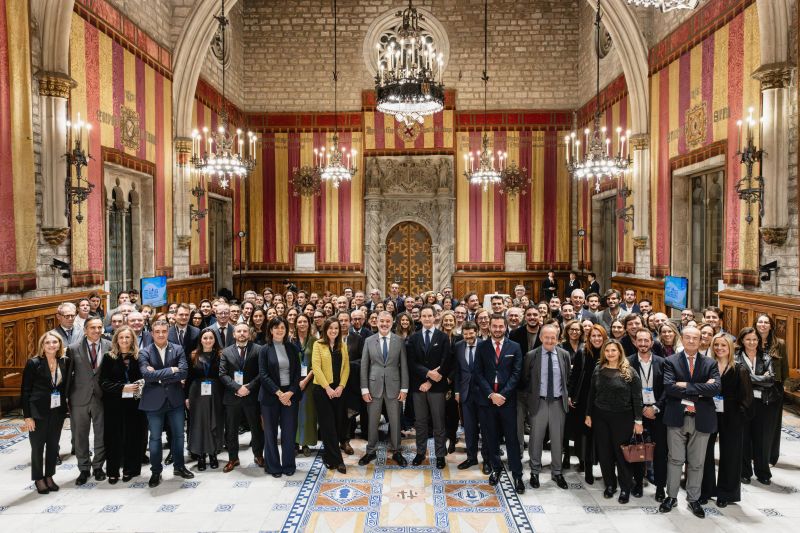
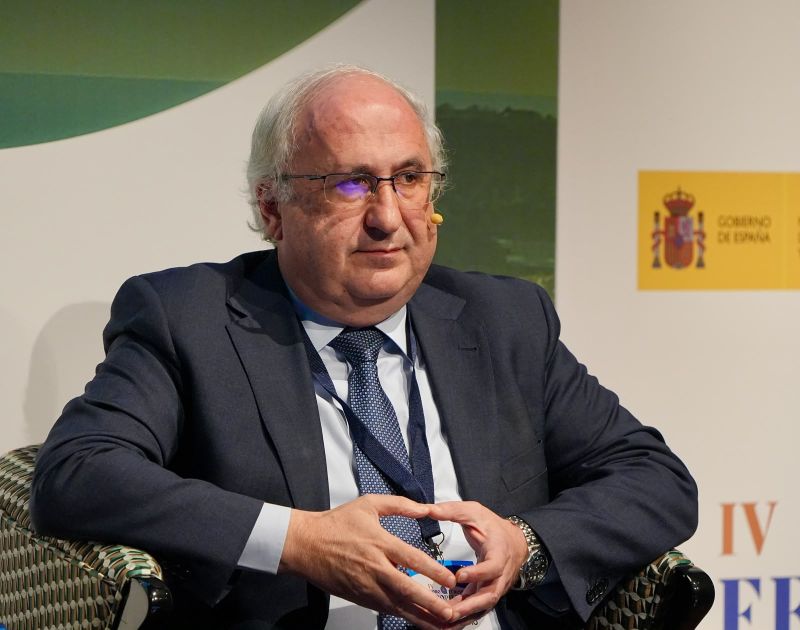
Luis Ignacio Vicente and Iván Sempere took part in ANDEMA’s 4th European Intellectual Property Forum in Barcelona
PONS IP, a global consultancy specialising in the strategic management of intangible assets, intellectual property and advanced technologies, took part in the 4th European Intellectual Property Forum, organised by the Spanish Association for the Defence of Trademarks (ANDEMA) with the support of the Spanish Patent and Trademark Office (OEPM).
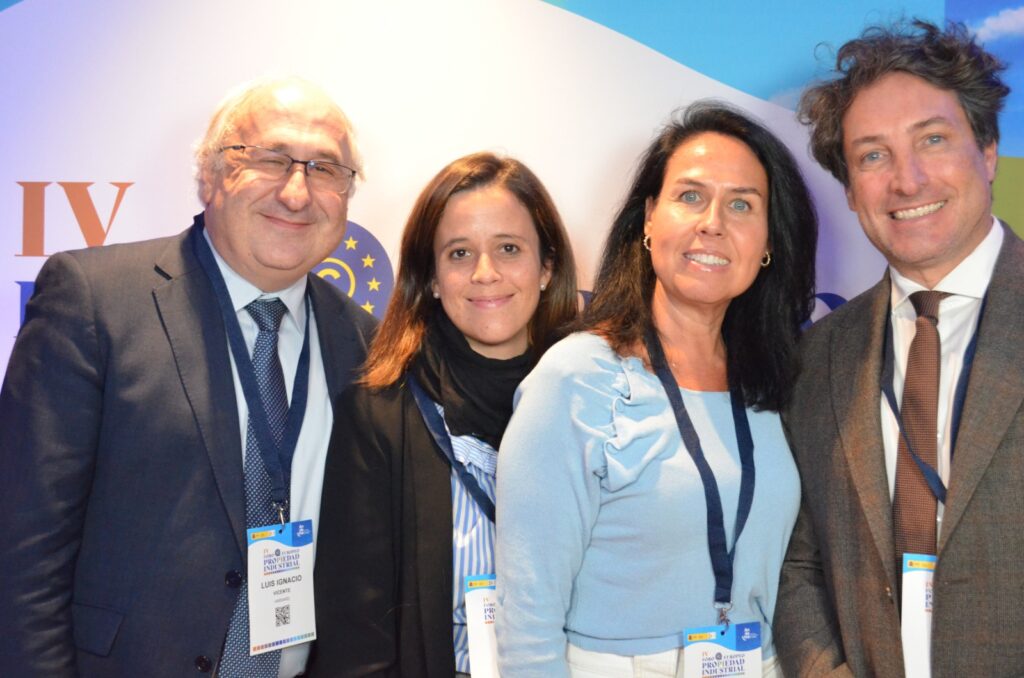
Over three days, La Pedrera in Barcelona became a meeting point for more than 300 professionals and nearly 60 speakers from institutions, associations and companies across a range of sectors. Alongside contributions from Luis Ignacio Vicente and Iván Sempere, PONS IP was also represented throughout the two main conference days by Rocío Peris, National Business Development Director, and Dulce Rodríguez, Intellectual Property Consultant in the Commercial Management Department. The team met with companies, institutions and industry professionals in a networking environment focused on exchanging knowledge and identifying shared challenges in the management and enforcement of intangible assets.
The institutional opening was led by Eduardo Petrossi, President of ANDEMA and Chief Executive Officer of Mahou San Miguel, and Jaume Duch, minister for European Union and External Action of the Government of Catalonia. Representatives from the OEPM and other national and European institutions contributed to a programme addressing the protection of innovation, the valuation of intangible assets, artificial intelligence and the fight against counterfeiting.
From protecting innovation to turning it into value
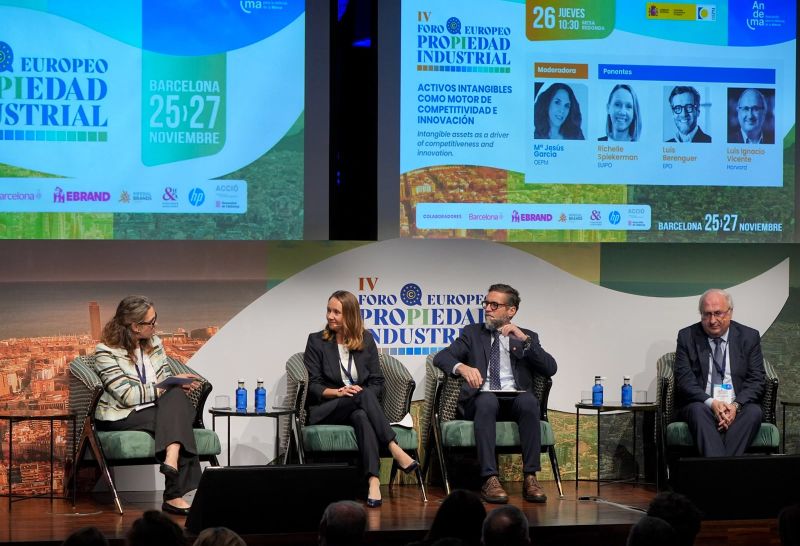
On the first day, Luis Ignacio Vicente, Strategic Adviser at PONS IP, participated in the round table “Intangible assets as a driver of competitiveness and innovation”, alongside representatives from the European Patent Office, the European Union Intellectual Property Office and the OEPM.
The discussion focused on the need to integrate intellectual property into the earliest stages of innovation projects, when decisions are made about which knowledge should be protected, how it will reach the market and how it can generate value.
The panel also addressed one of the main barriers to financing intangible assets. Accounting criteria mean that a significant proportion of internally generated assets are recorded as expenses and do not appear in financial statements in a way that fully reflects their economic potential. This limited visibility restricts their incorporation into risk models and makes it more difficult for patents or trademarks to be used as collateral.
Luis Ignacio Vicente highlighted the importance of more consistent, traceable and affordable valuation processes, supported by clearly documented purposes and assumptions. The aim is not necessarily for every valuer to reach the same figure, but for them to apply comparable and robust procedures capable of building confidence among companies, investors and financial institutions.
From intangible asset value to proving damages
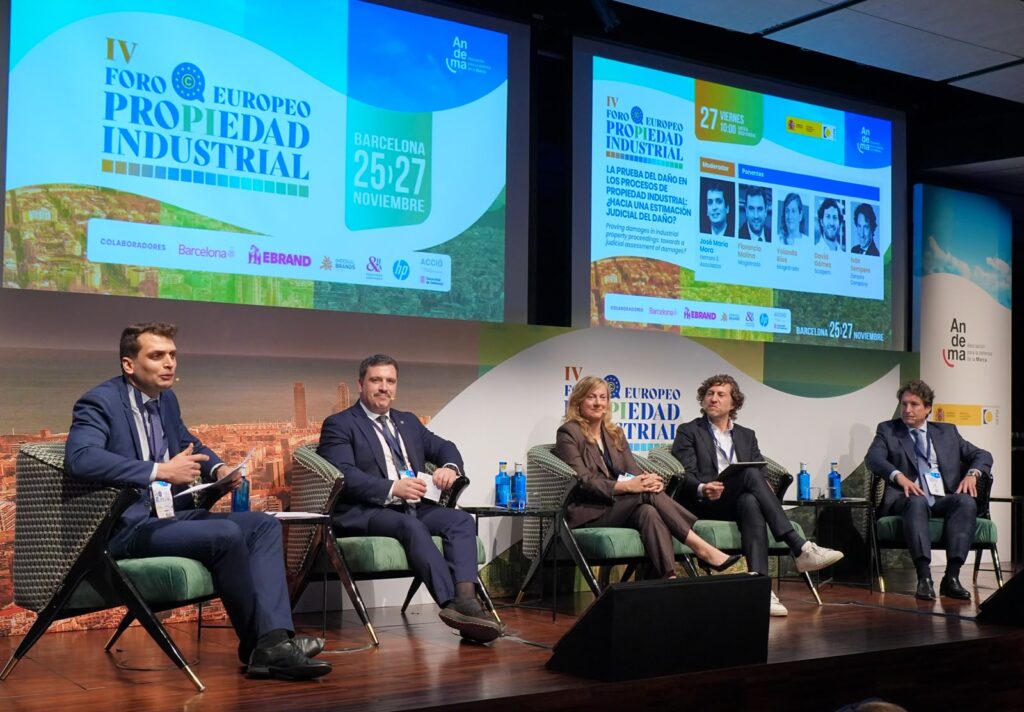
The final day shifted the debate towards another major challenge in intellectual property proceedings: demonstrating the true extent of the harm caused by an infringement.
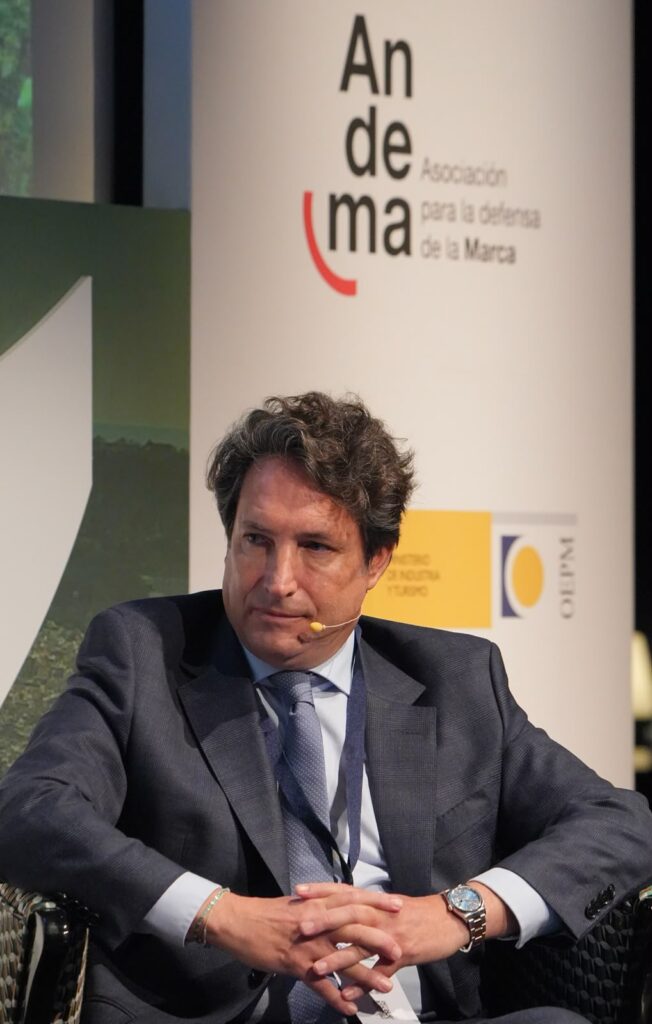
Iván Sempere, deputy Managing Director at PONS IP and a member of ANDEMA’s Board of Directors, participated in the round table “Proof of damages in intellectual property proceedings: towards a judicial assessment of damages?”
Drawing on his experience in the protection and enforcement of trademarks and designs, Sempere focused on the difficulty of quantifying financial loss, reputational damage and the advantage gained by the infringer. Legal practice is moving towards a more sophisticated application of existing compensation criteria, supported by intangible asset valuation methodologies and new technological capabilities.
Sales and pricing analysis, platform monitoring, transaction traceability and the preservation of evidence can help determine the scale of an infringement and its link to the harm suffered. This evidence must be brought before the courts rigorously and in full compliance with the safeguards established by the legal system.
The forum received institutional support from Barcelona City Council and ACCIÓ, the Catalan Government’s agency for business competitiveness, alongside companies operating in the technology, consumer goods and intellectual property sectors. Their involvement brought together business, institutional and professional perspectives on the future of intellectual property in Europe.