The consultancy has contributed to the publication of the “White Paper on Quantum Technologies for the 2025-2030 Strategy”, by DigitalES, and the report “Energising the quantum technology ecosystem in Spain”, prepared by Fundación Cotec’s Quantum Working Group.
PONS IP, a consultancy specialising in the strategic management of intangible assets, has taken part in two initiatives aimed at strengthening Spain’s quantum technology ecosystem: the White Paper on Quantum Technologies for the 2025-2030 Strategy: Applicability, National Strategy and Impact Opportunities, coordinated by DigitalES, and Energising the quantum technology ecosystem in Spain, a document prepared by Fundación Cotec’s Quantum Working Group and coordinated by PONS IP and Multiverse Computing.
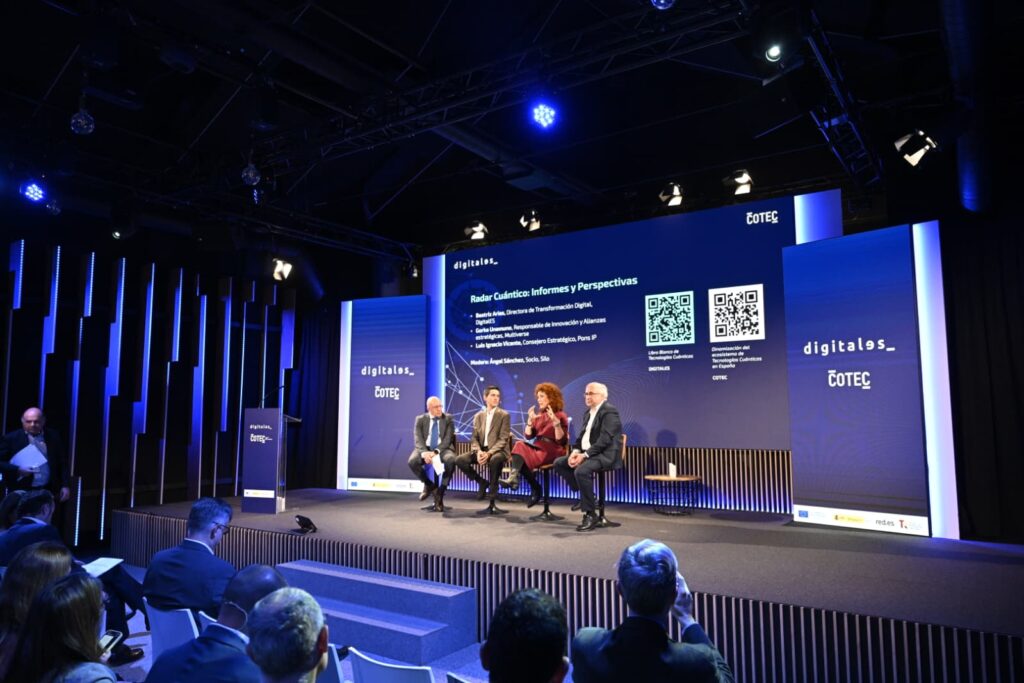
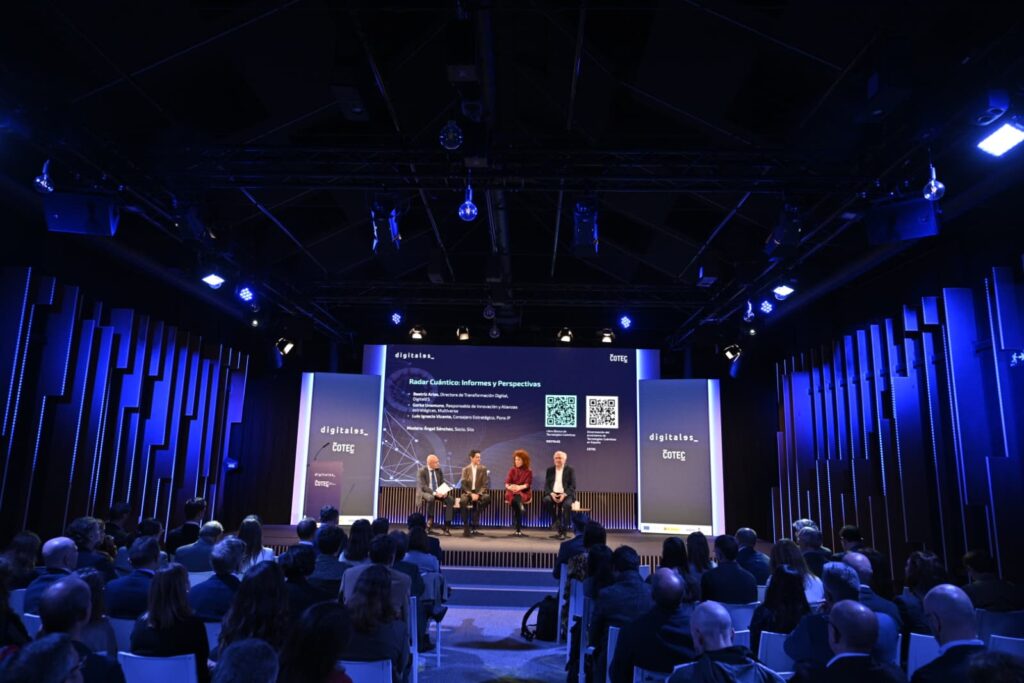
Both studies were presented at the event Quantum Technologies: a roadmap for Spain’s leadership in Europe, organised in Madrid by DigitalES and Fundación Cotec with the support of Red.es. The event brought together representatives from public authorities, technology companies, start-ups, universities and research centres. Both documents agree that Spain has significant scientific, technological and business capabilities, and propose accelerating knowledge transfer and strengthening cooperation among stakeholders in order to turn this potential into applications and industrial activity.
An ecosystem with capabilities, but not yet at scale
The Fundación Cotec document analyses the position of the national ecosystem and proposes measures to accelerate its industrial development. The assessment indicates that Spain has a solid scientific base, specialised talent and companies with an international outlook, but still needs to strengthen scale-up capital, coordination among stakeholders and the availability of professionals capable of connecting research with the market.
The analysis also distinguishes between the levels of maturity of the main branches of quantum technology. While certain solutions relating to secure communications and post-quantum cryptography are approaching deployment, quantum computing continues to advance through use-case validation, and quantum sensing requires support for research, testing infrastructure and industrialisation. This diversity calls for funding, regulatory and public-demand instruments to be tailored to the circumstances of each technology.
The recommendations set out in the document include selecting the segments of the value chain in which Spain can build a distinctive position, using the public sector as a first customer, facilitating scale-up capital, promoting strategic dual-use projects and extending a culture of protecting results through appropriate intellectual property management.
“Spain has a unique opportunity to build its own position in quantum technologies, but we must choose the links in the value chain where we can become indispensable. The Cotec report proposes generating demand from the public sector, mobilising scale-up capital, promoting strategic dual-use projects and systematically protecting innovation results. In a technology that is critical to security and defence, intellectual property is a tool of sovereignty: it makes it possible to attract investment and transfer knowledge without losing control over strategic developments,” says Luis Ignacio Vicente del Olmo, Strategic Adviser at PONS IP and, on behalf of the consultancy, coordinator of Fundación Cotec’s Quantum Working Group, co-led with Multiverse Computing.
Patents as a technological and competitive map
In the DigitalES White Paper, PONS IP conducted an analysis of the technological and competitive landscape based on the information contained in patents. The study identifies innovation trends, leading players, areas of specialisation and Spain’s position in the international context.
The analysis covers more than 17,000 patent families in quantum technologies, with annual growth of close to 25%. Almost 80% are concentrated in five countries, while Spain accounts for approximately 1% of worldwide activity. Although still modest, this share is significant in view of the emerging nature of the technologies analysed and the opportunity to consolidate competitive advantages in specific segments of their value chain.
The technological information contained in patents shows where competition is concentrated, which organisations are turning research into protected technology, and the areas in which opportunities for specialisation exist. Its value is therefore not limited to measuring inventive activity, but extends to decision-making on research, investment, collaboration and technology transfer.
“The analysis conducted for the DigitalES White Paper shows that the information contained in patents can identify trends, players, specialisation niches and Spain’s position relative to its competitors. It is not merely an indicator of inventive activity, but a source of strategic intelligence for deciding where to conduct research, invest and transfer technology. Incorporating this information into innovation decisions and protecting results from the outset will be essential to transform our scientific capabilities into competitive advantages and strengthen technological sovereignty,” explains Isabel Marco Martínez, Innovation Projects Manager in PONS IP’s Innovation and Technological Development Department, who contributed to the preparation of the DigitalES White Paper through the patent-based analysis of the technological and competitive landscape.
Technology, the market, intellectual property and strategic autonomy under discussion
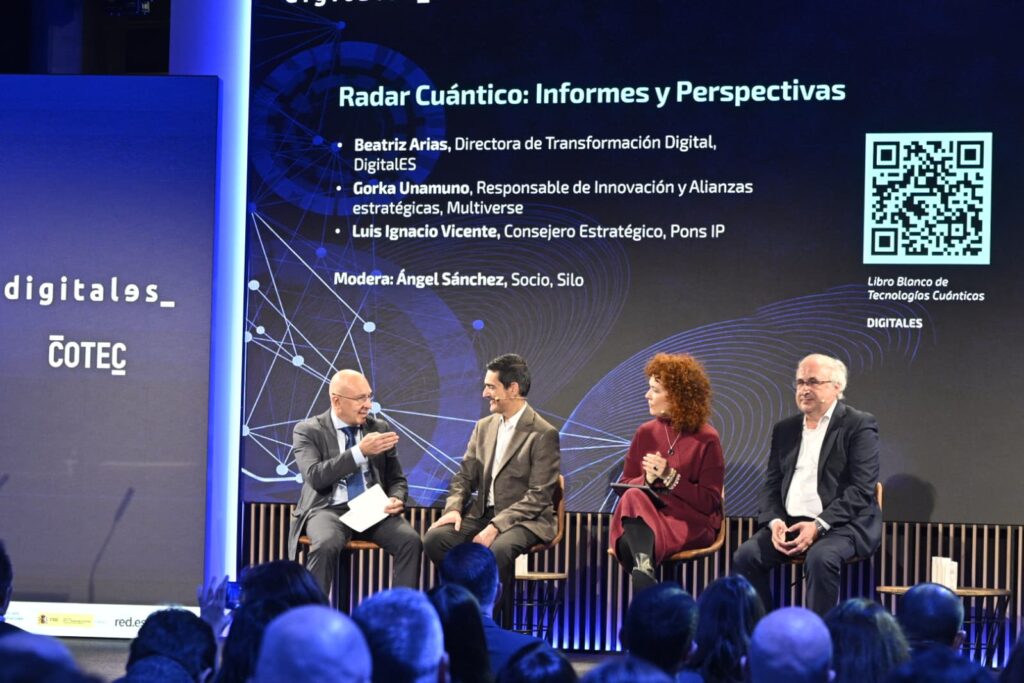
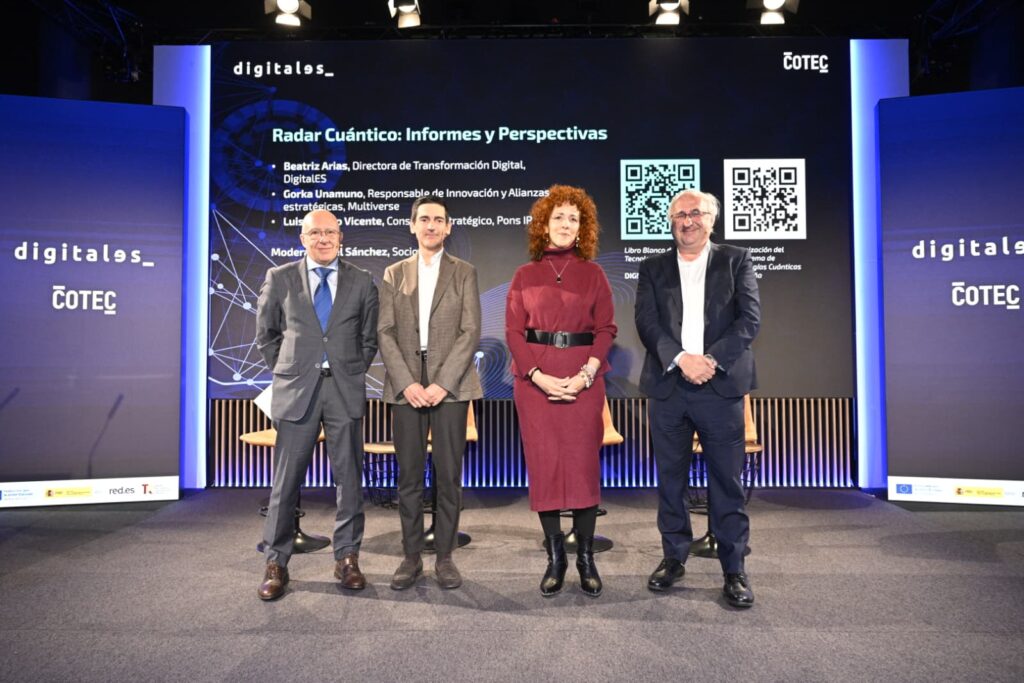
As part of the main event presenting the two documents, PONS IP Strategic Adviser Luis Ignacio Vicente del Olmo took part in a discussion with Beatriz Arias, Director of Digital Transformation at DigitalES, and Gorka Unamuno, Head of Innovation and Alliances at Multiverse Computing, moderated by Ángel Sánchez, Partner at Silo.
The discussion addressed Spain’s position in the quantum race, the varying levels of maturity of computing, communications and sensing, and the instruments needed to support the market uptake of solutions. Topics included public procurement of innovation, scale-up funding, public-private collaboration and the protection of results through intellectual property rights.
Against this backdrop, Luis Ignacio Vicente del Olmo focused on the need for Spain to compete through specialisation and to use patent information to identify promising technological spaces, guide investment and retain control over critical developments. According to the PONS IP representative, “this perspective is particularly relevant to dual-use technologies, whose exploitation may affect security, defence and strategic infrastructure”.
The event continued with sessions devoted to use cases and their scale-up, talent, quantum networks and the areas in which Spain can build a competitive position.
A collective effort involving business, institutional and scientific stakeholders
The preparation of the two documents involved broad participation from business, institutional, scientific and academic stakeholders. The White Paper on Quantum Technologies for the 2025-2030 Strategy: Applicability, National Strategy and Impact Opportunities, coordinated by DigitalES, includes contributions from Cellnex Telecom, Deloitte, Fsas Technologies, a Fujitsu Company, Moeve, Nokia, NTT DATA, PONS IP, Telefónica de España and Universidad Carlos III de Madrid.
Energising the quantum technology ecosystem in Spain, prepared by Fundación Cotec’s Working Group and coordinated by PONS IP and Multiverse Computing, involved Adif, Axencia Galega de Innovación, Ayming España, the city councils of Barcelona, Madrid and Málaga, BBVA, CaixaBank, CDTI, Comunidad de Madrid, Corporación Tecnológica de Andalucía, CSIC, Deloitte, Gobierno de las Islas Baleares, Gobierno de Navarra, Gobierno de La Rioja, Grupo Oesía, Iberdrola, Instituto para la Competitividad Empresarial de Castilla y León, Junta de Andalucía, LaLiga, Logista, MasOrange, Primafrío, Real Madrid Club de Fútbol, Redeia-Elewit, Sociedad de Fomento de San Sebastián, Tecnalia, Telefónica, Universidad Carlos III de Madrid, Universidad de Granada and Westinghouse.
The working sessions also included AMETIC, DigitalES, Qilimanjaro Quantum Tech, Quside, QUBIZ Team, QCentroid, Navantia, Renfe, Bullnet Capital, Sociedad Española para la Transformación Tecnológica, Innobasque and representatives of Gobierno Vasco as invited entities or observers, together with specialists from Universidad Complutense de Madrid and Universidad Politécnica de Madrid.
The two full documents can be accessed and downloaded from the Fundación Cotec and DigitalES websites here: