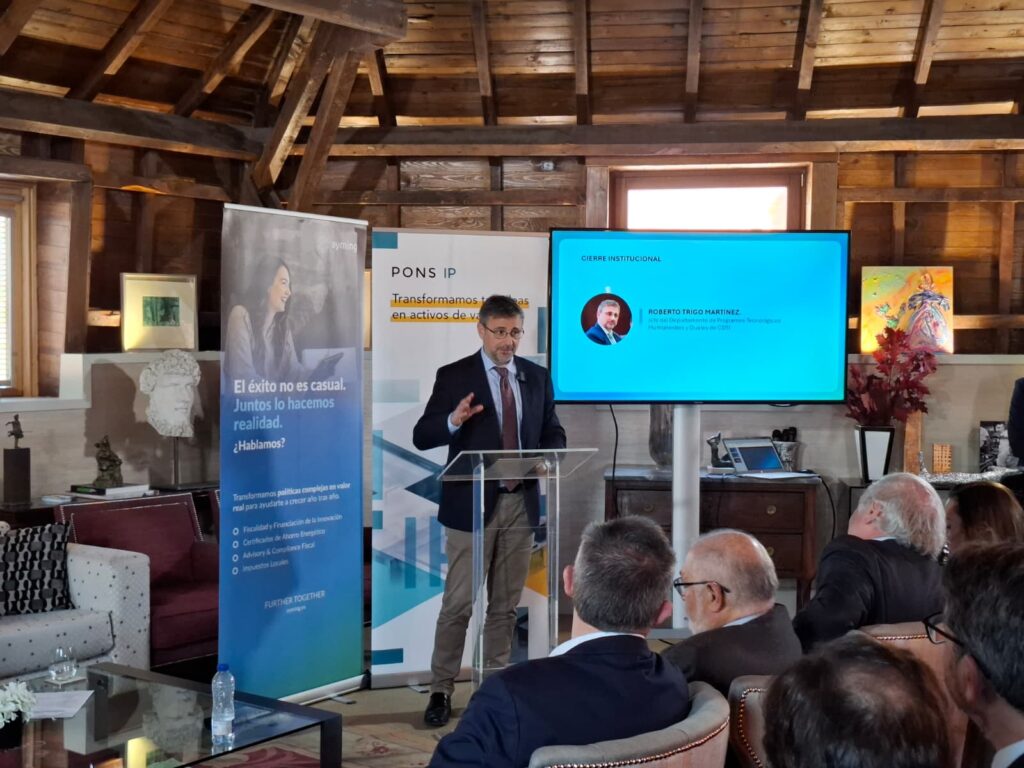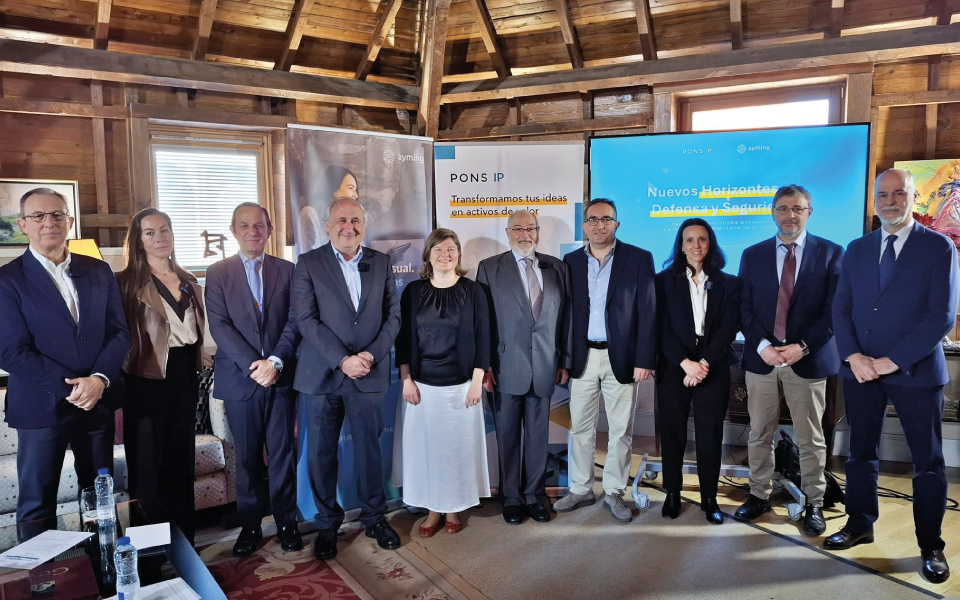
PONS IP, a global industrial and intellectual property consulting firm, and Ayming, an international group specialising in innovation financing and corporate taxation, hosted the “New Horizons in Defence and Security” conference at the PONS Foundation headquarters where representatives from the sector’s leading industrial players, as well as academics, public sector officials, and innovation experts, promoted a roadmap for the sector’s R&D with the aim of providing tools to protect, finance, and scale up innovation amid a record European investment cycle in 2025 within the defence sector.
In that sense, the meeting comes at a turning point for innovation in the defence sector: the European Defence Agency (EDA) forecasts that by 2025, spending by Member States will reach 381 billion Euros, approximately 2.1% of GDP, with investment in equipment and major programmes amounting to 130 billion Euros as a result of military R&D investment that will reach approximately 17 billion Euros, historic highs that signal a significant structural leap in innovation and capabilities within the EU framework.
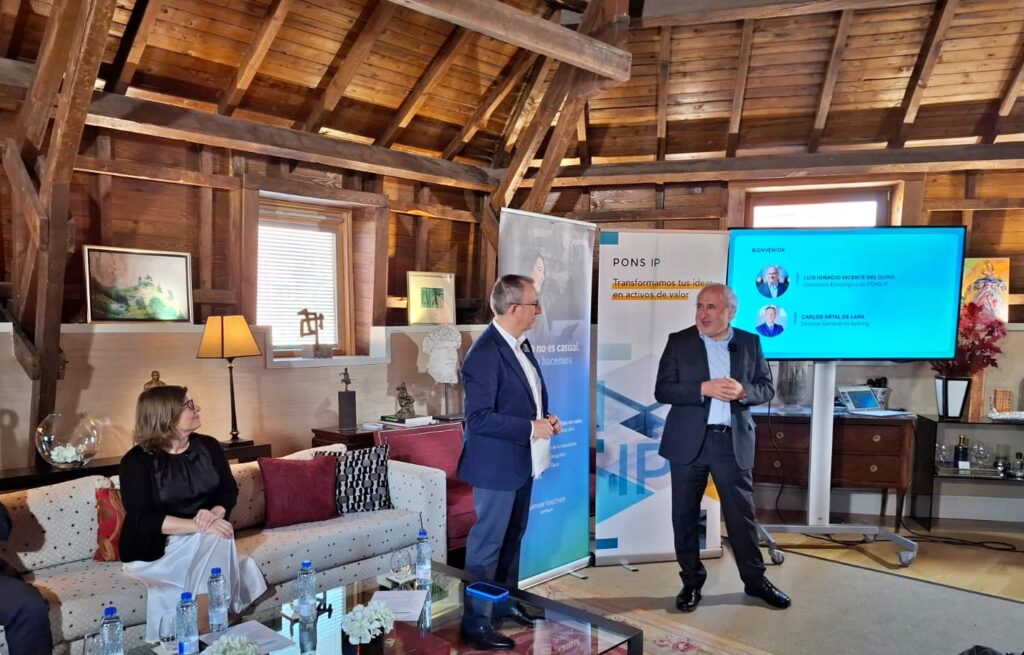
The central concepts as set forth in the institutional opening session, presided by Luis Ignacio Vicente del Olmo, Strategic Advisor at PONS IP, and Carlos Artal de Lara, Managing Director of Ayming Spain, highlighted this favourable European context and the importance of having adequate instruments to protect critical technology, as well as a more effective use of funding instruments and the promotion of necessary partnerships to accelerate the transition from prototype to scale. They also emphasised that the priority is to “invest better” by being able to identify proprietary strategic technology, protect it with a solid industrial property strategy, and combine access to European and national grants with private capital to reach the market sooner.
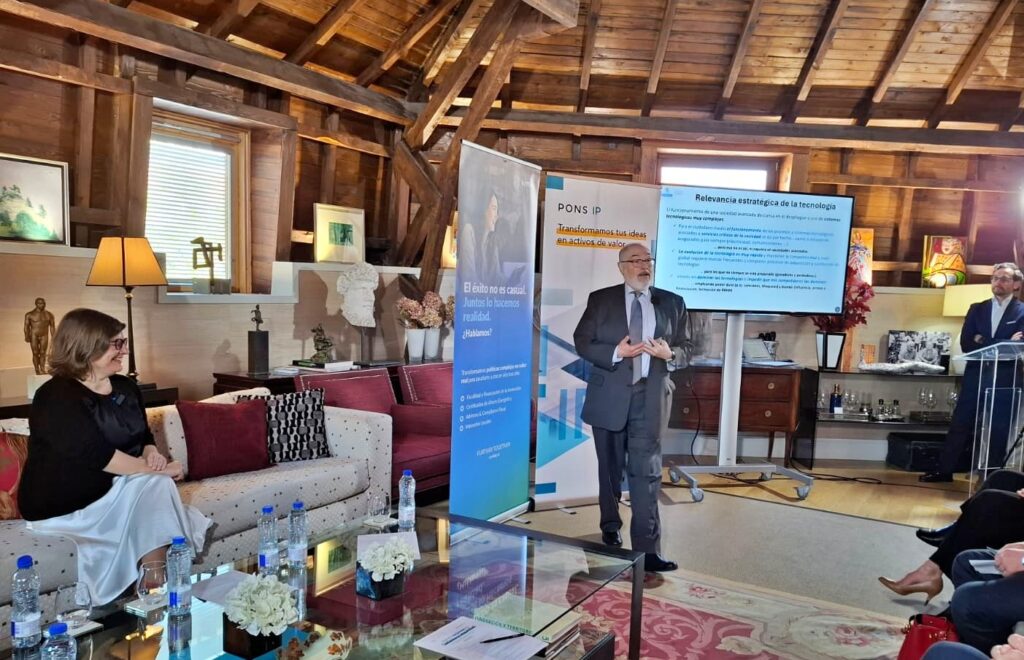
The opening address by Gonzalo León Serrano, Professor at the Polytechnic University of Madrid and member of the Executive Committee of the Innovative Companies Forum, set the stage for this record surge in investment by noting that, in a global landscape characterised by geopolitical pressures and rapid technological change, “Europe will only be strong if it is capable of protecting and developing its own capacity for innovation. Technological sovereignty is no longer just an aspiration: it is essential to ensure our security and competitiveness in the world”.
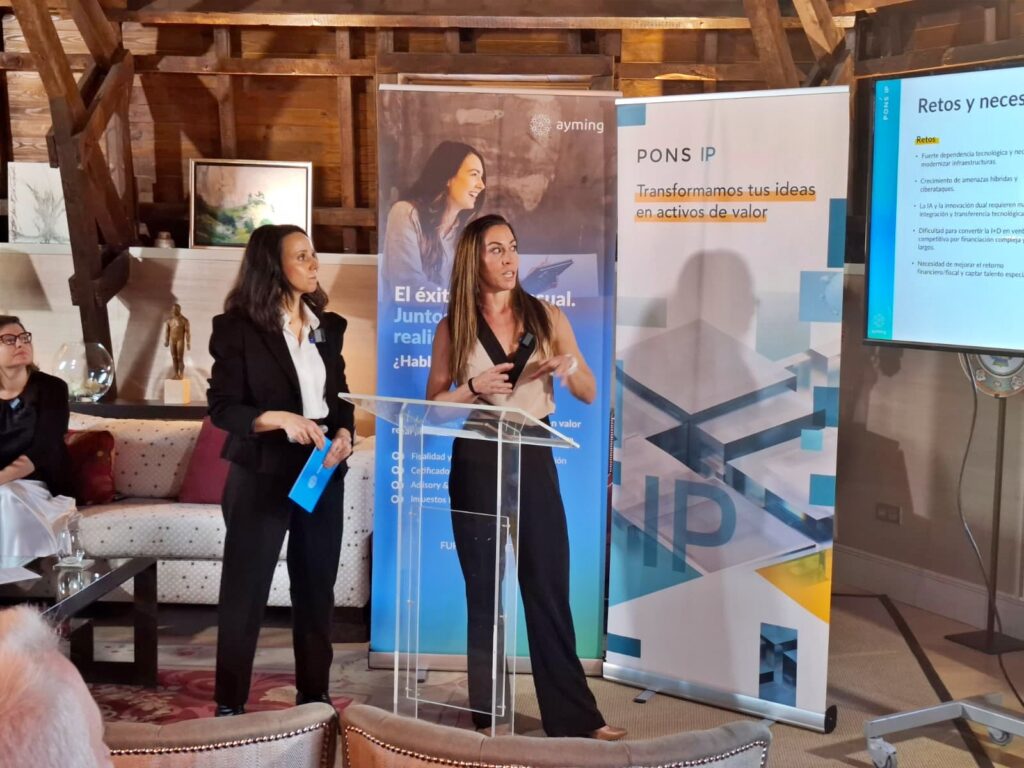
The practical session then focused on the “Safe innovation: protecting, funding, and scaling up” panel, presented by Isabel Marco, Head of Innovation Projects at PONS IP, and Sheila González Arandilla, Director of Innovation at Ayming, who both outlined a roadmap for scaling up Spanish companies in the defence sector, covering everything from key considerations for determining what to patent, what to licence, and what to keep as a trade secret in the early stages to avoid obstructions, to practical strategies for facilitating co‑innovation, as well as improving access to funding instruments such as the European Defence Industry Programme (EDIP) and the European Defence Fund (EDF) through a proprietary methodology designed to shorten the time between approval and the first fundable milestone.
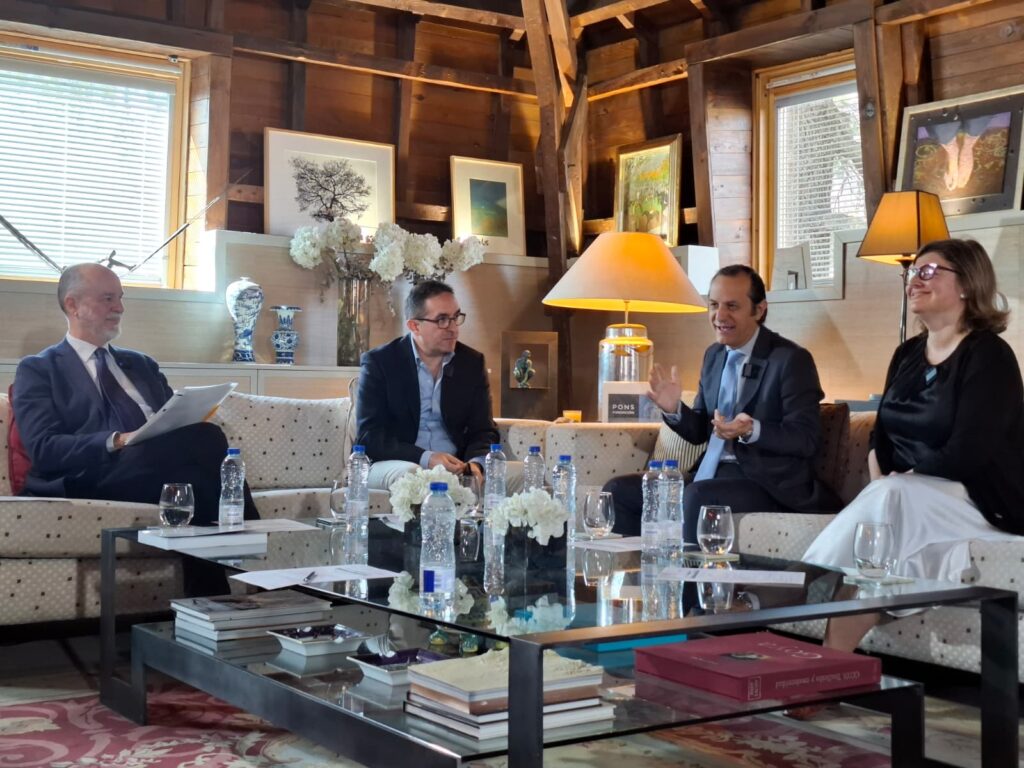
A round-table discussion on critical technologies and the future of the industry, moderated by Ignacio Dancausa, General Manager of APTIE, brought together Gonzalo Aréchaga Tarruell, Innovation Manager at Thales; Delia Rodríguez de Llera, CEO of Eye4Sky; and Jorge Quiroga Blanco, Head of R&D Management for the Innovation Team at Navantia. The discussion focused on key industrial, regulatory, and funding factors needed to boost the Spanish defence industry, with emphasis on the opportunities offered by public-private partnerships to strengthen the Spanish business ecosystem’s capacity to lead consortia and accelerate the technological maturity of its investments, as well as research into dual-use technologies in areas such as cybersecurity, embedded software, advanced sensor technology, and space optics, and on requirements for scaling up, alongside the necessary implementation of policies to boost funding and protect innovation in strategic technologies to ensure the sovereignty of Spanish technologies, boost economic activity through technology exports, and simultaneously safeguard the critical supply chain in Spain and the EU.
Following the discussion, Roberto Trigo, Head of the Department of Multilateral and Dual Technology Programmes at CTDI, delivered his closing remarks in which he emphasised the importance of aligning EDIP and EDF projects with the Industrial and Technological Plan for Security and Defence presented by the Government (with an expected allocation of 10,471 million Euros by 2025) as a lever to consolidate industrial capabilities, incorporate SMEs and start-ups, and thereby accelerate the transfer of R&D to the market.