

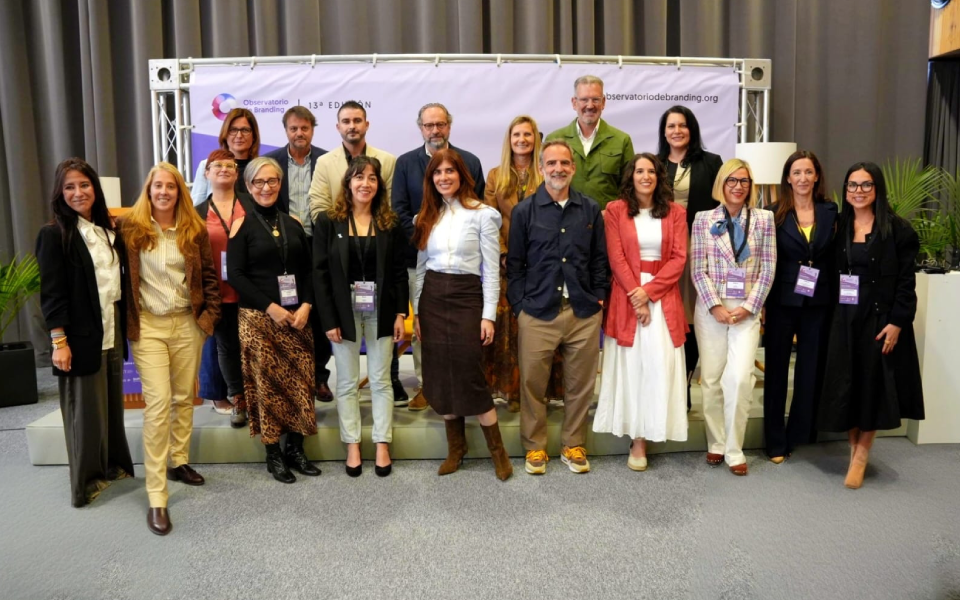
13th Edition of Observatorio de Branding
Madrid is hosting a new event focused on how to create the right conditions for bold decisions–a key factor in developing truly distinctive brand strategies.
Bizum, ElPozo, Lladró and Metro de Madrid take centre stage in an edition that reinforces the role of risk in brand strategy
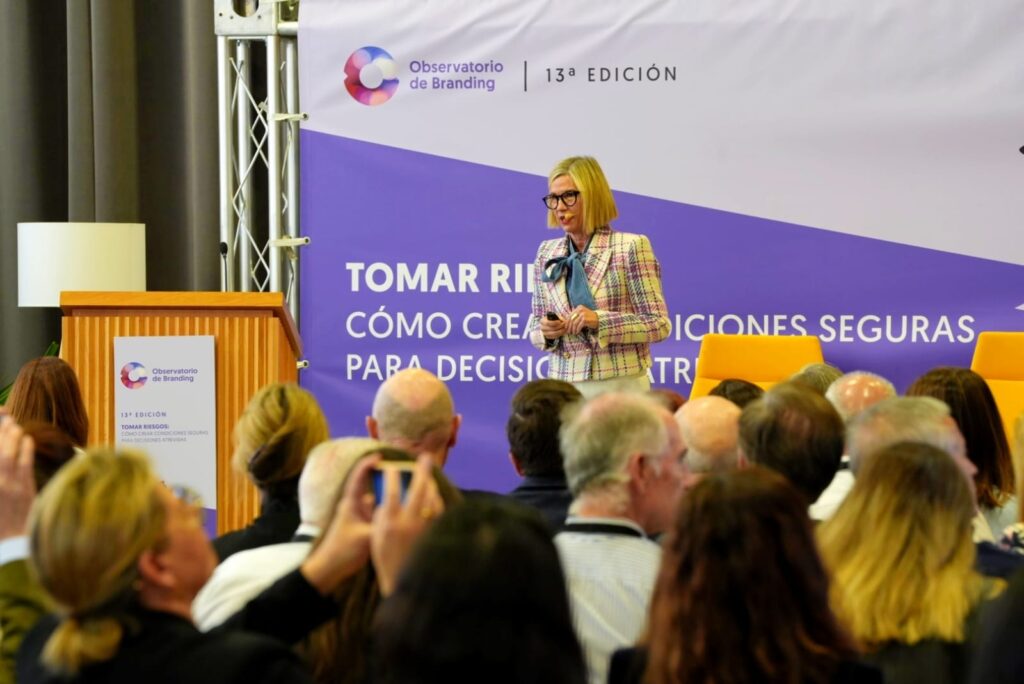
Observatorio de Branding (OB) held a new edition today at the Metro de Madrid headquarters, centred on a key message: risk is not a threat, but a strategic lever when managed with knowledge, infrastructure and brand vision. Under the theme ‘Taking risks: how to create the right conditions for bold decisions’, the conference brought together experts, executives and professionals from the marketing, communications and brand strategy sectors.
The event, organised by the Asociación de Marketing de España (Spanish Marketing Association), the Foro de Marcas Renombradas Españolas (FMRE) (Leading Brands of Spain Forum), GFK Spain, PONS IP and Summa Branding, combined lectures, brand discussions and insights on how to innovate in a context saturated with content, where standing out is more necessary than ever.
Santiago Rueda, Secretary General of Metro de Madrid, gave the opening remarks at the event. Juan Cantón, Managing Director of AMKT then introduced the event by highlighting that “Observatorio de Branding is entering a new phase. We don’t just analyse what’s happening in the sector; we want to anticipate it. This year we’re taking it a step further with a more dynamic and cross-cutting format that’s more closely aligned with the real challenges facing brands”.
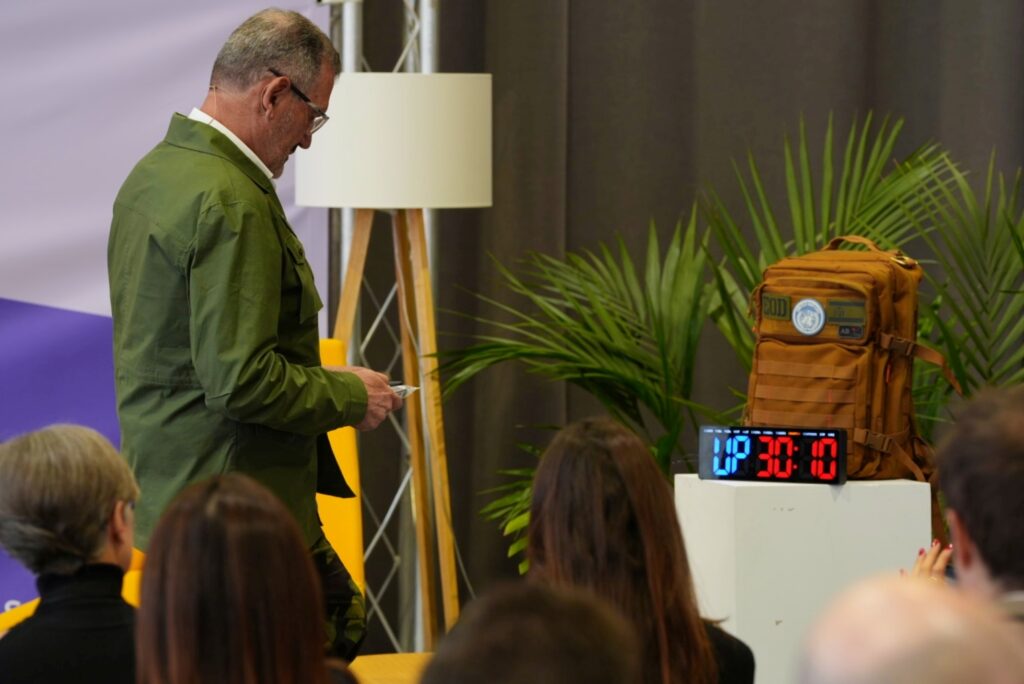
The first talk of the day, ‘Fear is for the brave’, was given by Julio de la Iglesia, a TEDAX engineer and coach specialising in fear management and decision-making under pressure. Drawing on a career that combines real bomb disposal operations with management training at leading companies, De la Iglesia demonstrated how fear—far from being a hindrance—can become a strategic tool for acting with clarity in uncertain situations. Julio starts from a clear premise: fear does not go away; it needs to be managed. His talk offered a unique perspective on courage as a professional skill, tying in directly with the central theme of the Observatorio: taking risks with method, purpose and preparation.
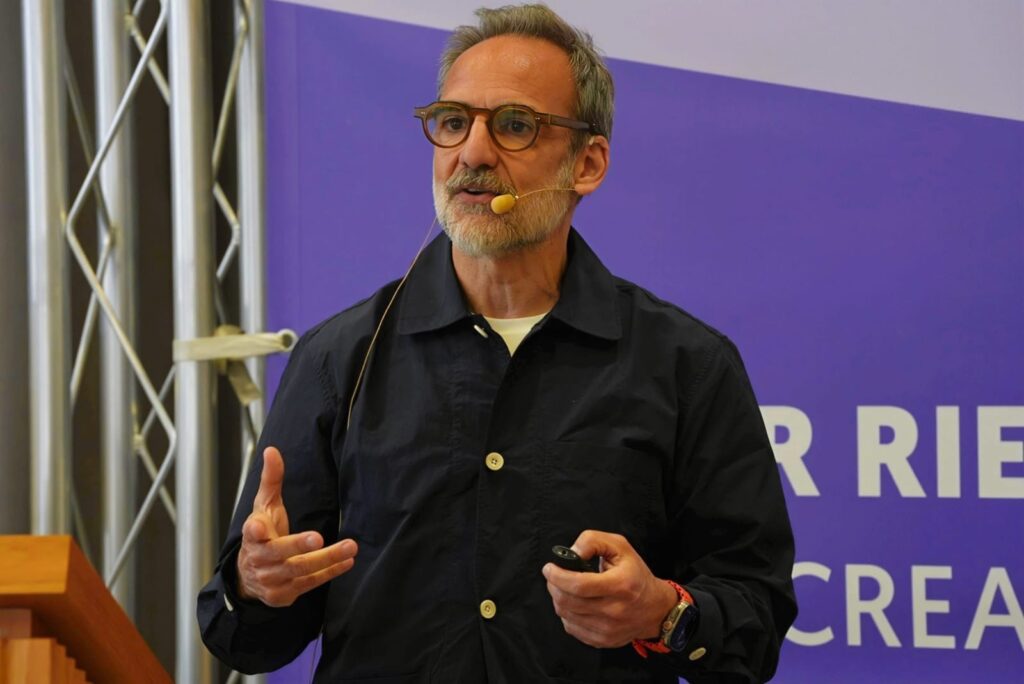
The presentation by Rafa Soto, Chief Creative Officer at Summa, entitled ‘The Leap: branding for risky decisions’, explored how brands can venture into bolder territory without losing consistency or relevance. With a proven track record in brand transformation projects and digital experiences for leading companies, Soto explained how strategic design and creativity can act as catalysts for change when organisations are faced with decisions that involve risk. His presentation highlighted the importance of building brands capable of evolving boldly, drawing on data, purpose and a strong narrative that allows them to take “the leap” without improvising. This is a particularly pertinent observation in a context where standing out requires taking calculated risks and embracing ideas that challenge the status quo.
Brands that are evolving: Lladró and Metro de Madrid
The first round-table discussion brought together Lladró and Metro de Madrid, two companies with very different histories but united by a common challenge: to evolve while retaining their essence.
For Sonia Casado, Head of the Brand and Customer Division at Metro de Madrid, innovation is built on history: “In a century-old company like Metro de Madrid, innovation does not mean breaking with the past, but building on it. We draw on our history to continue building the Metro of the future: an innovative Metro that is already a reality”.
For her part, Cristina Egido, Global Marketing Director at Lladró, highlighted the ongoing nature of the brand’s repositioning: “At Lladró, rather than a turning point, we have viewed our repositioning as an ongoing process in which we recognise that renewal is not an option, but a necessity that is also inherent to who we are, as an innovative spirit has been part of our very essence since the company’s inception”.
The panel was moderated by Lucía del Valle, Director of Marketing and Communications at the Leading Brands of Spain Forum, who recalled that behind every leading brand lie bold decisions: “Behind every leading brand there are always decisions that were considered risky at the time. At FMRE, we know that risk cannot be eliminated, only managed: through knowledge, strategy and a supportive ecosystem. When done right taking risks isn’t a gamble; it’s a competitive advantage”.
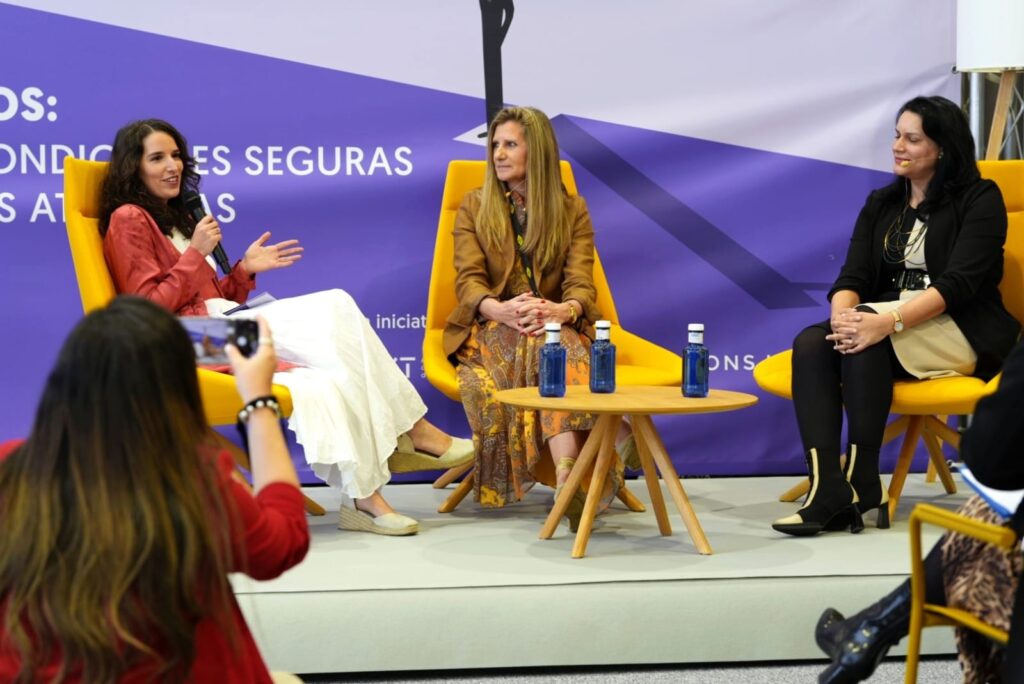
Taking calculated risks: the power of knowing your customers
Moira Tesser, Research Manager at FMCG and Sol Ayarza, Qualitative Research Manager at GfK Spain, highlighted the role of consumer knowledge as the basis for making risky decisions with less uncertainty. Both experts demonstrated how data, research and active listening enable brands to anticipate behaviour, identify opportunities and minimise the risk of failure when they decide to innovate.
Their talk highlighted that there can be no smart risk without a deep understanding of the market, and that the brands that grow the most are those that combine boldness with solid, actionable insights. “Innovation always involves taking risks; that is why understanding the trends that are shaping consumer behaviour today is an essential roadmap. Understanding them in detail enables brands to turn uncertainty into strategic decisions that have a positive impact on their results”, said Tesser.
The invisible infrastructure of bold brands
The General Manager of PONS IP, Nuria Marcos, emphasised the role of industrial property as a foundation for innovation without exposing oneself to risk: “Brave brands don’t take risks blindly: they take risks based on a solid infrastructure. Industrial property rights form the basis for creating a protective shield that enables us to innovate, be disruptive and expand into new areas with fresh approaches, without leaving ourselves exposed or becoming vulnerable”.
Her talk demonstrated how the protection of intangible assets acts as a safety net, enabling the exploration of new creative and business areas. Marcos pointed out that entrepreneurial courage lies in building the infrastructure that underpins and enables risk-taking—an idea that ties in directly with the central theme of the Observatorio.
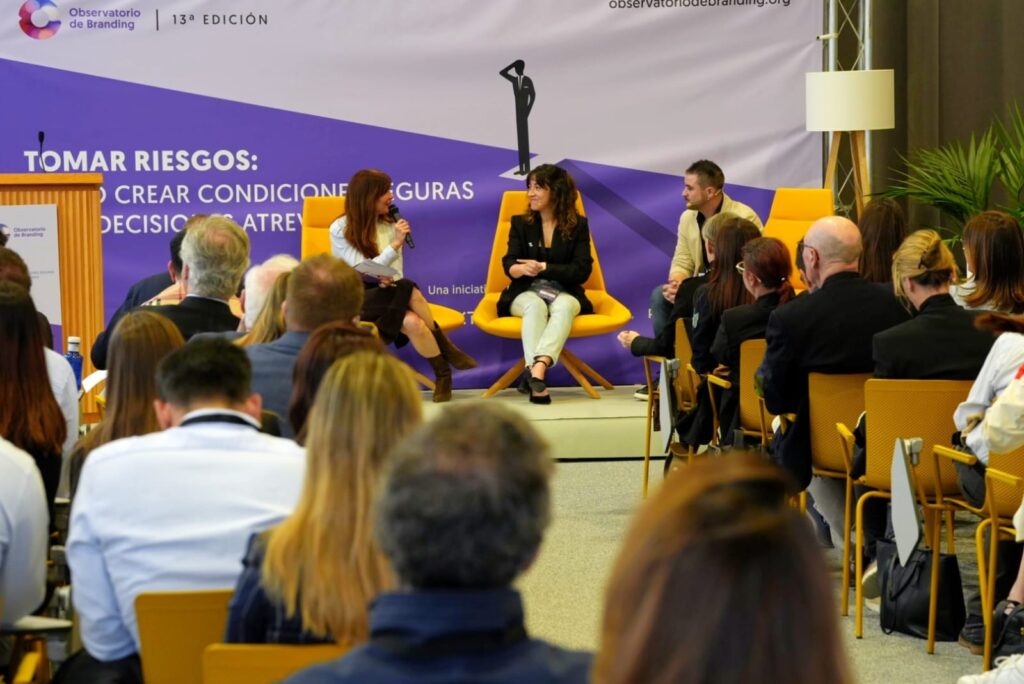
Taking risks: a conversation with Bizum and El Pozo Alimentación
The discussion between Bizum and ElPozo Alimentación featured Lorena Poza, Head of Communications, Marketing and Sustainability at Bizum, and Pablo Olivares, CMO of ElPozo Alimentación, and was moderated by Beatriz Navarro, president of AMKT and CMO of Renault.
The panel discussed how two brands from very different sectors approach decisions involving risk: from innovation in digital services to the development of traditional consumer goods categories. Lorena Poza and Pablo Olivares shared insights on how to manage reputation, anticipate consumer expectations and maintain brand consistency in times of change. The discussion made it clear that taking risks is not the preserve of disruptive brands, but a cross-cutting necessity in order to remain relevant in highly competitive markets.
The president of AMKT, Beatriz Navarro, emphasised the strategic responsibility of marketing in a context where taking risks is no longer just a creative matter:
“Today we’re not just talking about creativity; we’re talking about decisions that have a direct impact on the business, and the role that marketing—and CMOs—play in steering those decisions when they involve risk”.
Lorena Poza stated that “the greatest risk for a brand today is to be or become irrelevant: to be present, but to mean nothing—neither to people nor to culture, nor at the moment of choice”. Pablo Olivares, CMO at ElPozo Alimentación, echoed this sentiment, adding that “the risk for a brand lies in standing still and losing relevance”.
With this new edition hosted in Barcelona, the Observatorio de Branding has established itself as a benchmark event for the analysis and discussion of everything about the branding sector and brand management, thus boosting the intangible economy.
You can now watch the video summary:


