

José Carlos Erdozain. Of Counsel at PONS IP
The Supreme Court (First Chamber) recently handed down an interesting judgment on the scope of so-called “weak trademarks”. This term refers to quasi-descriptive distinctive signs with a level of distinctiveness that could be classified as medium or low, but always with the understanding that they minimally fulfil their function of identifying a specific business origin.
The dispute concerned the priority trademark “NEUMÁTICOS KM0”, with the following graphical representation:
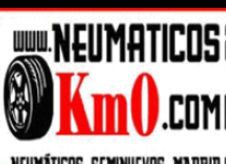
This trademark was registered for commercial business management and advertising, being used for the promotion and marketing of a garage service and the replacement of new and semi-new tyres.
The defendants, in turn, used in trade the name “Neumáticos Km0” in the Canary Islands and also applied for and registered the following trade name for the same services as the aforementioned trademark:

The owner of the priority trademark reacted to the registration of this trade name, essentially on the grounds that such a distinctive sign was relatively invalid due to the likelihood of confusion with the aforementioned trademark. The underlying argument was the coincidence in name and application.
Although the courts of first and second instance ruled in favour of the defendants, the Supreme Court overturned the judgment handed down by the Provincial Court of Las Palmas de Gran Canaria on the grounds that the requirements for invalidating the trade name registered by the defendants were indeed met. For the High Court, the likelihood of confusion was based on the fact that the signs in question were identical in terms of the word elements “Km0” and “KmZERO”, respectively, which “sound the same and convey the same common idea in the world of cars, vehicles and semi-new, little-used car parts”. This virtual phonetic identity, together with the identity in terms of application and concept, and the slight graphical difference, according to the High Court, “contribute decisively to causing confusion in the average consumer as to the common origin of the businesses”.
However, certain graphical identities, such as the colours red and black in both cases, as well as the inclusion of a tyre in both cases, should not be overlooked. All of these are, in short, ingredients that accentuate the similarity between the two signs and justify the invalidity of the later trade name.
In addition, the High Court finds grounds to recognise the plaintiff’s right to compensation amounting to one per cent of the infringing party’s turnover.
What is the significance of this judgment? In my view, the decision in question is highly relevant insofar as the Supreme Court incorporates, although it does not expressly mention it, the case law of the Court of Justice of the European Union on weak trademarks. According to this European case law, such trademarks are equally deserving of protection against infringing use as long as they are registered and have not been revoked for any reason. The fact that their configuration may include non-distinctive word (or graphical) elements should not be a reason to underestimate the scope of the ius prohibendi enjoyed by the owner of the trademark in question.
That said, it is true that there has been much debate in domestic case law about the protection deserved by so-called “weak trademarks”. There are reasons to argue in favour of a “theory of equivalent protection” (i.e. that the protection should be at least the same as that afforded to a more distinctive trademark), but there are also reasons to support a “theory of proportional protection” to the distinctive power of the alleged trademark.
Thus, the first position is based on the principle of legality and the need to grant the same protection to all holders of trademark rights registered in a specialised registry, under penalty of undermining the ius prohibendi (and also, of course, the ius utendi) enjoyed by the holder: if the same protection were not granted, what real value would a trademark registration have? If the relevant trademark office has decided to validate the application and has granted registration to the applicant, would an interpretation that ultimately fails to recognise a minimum degree of distinctiveness in the sign invoked not amount to denying effective legal protection? If it has been registered, as the General Court of the European Union has repeatedly recognised, it is because its minimum distinctiveness is presumed, and if it does not have it, it should be removed from the trademark register for falling under an absolute prohibition due to lack of distinctiveness.
However, it is not unreasonable to argue that a trademark having a pseudo-descriptive composition, or bordering on the minimum distinctiveness required, may have an effect of exclusive use that leads to an abuse of rights, and that this effect is not what the trademark system really seeks. This is based on the premise that signs having a distinctiveness that does not reach a minimum can be used.
However, the soundness of this High Court ruling is that it recognises that, insofar as the sign is registered and has not been revoked, nor its validity questioned for falling under an absolute prohibition of registration due to lack of distinctiveness, it must have the effects of any registered trademark. If the party against whom the symbol is invoked considers that it is a descriptive or generic sign or, in general, that it lacks a minimum degree of distinctiveness, its reaction should be to challenge the registration by way of a counterclaim. If it fails to do so, it is content to accept that effect, however minimal but sufficient, so that the holder of the registered right can pursue infringing uses.


