


Jaume Mourisco Ayuso. Intellectual Property Lawyer | Litigation Department
There are many occasions when clients, faced with the creation of a business model, begin to investigate and think about what might be the best name to define their business, that is, what their trademark should be. And, correspondingly, there are many occasions when the client comes up with a name that in some way describes the products or services they intend to offer, with the corresponding risk that the trademark will be refused.
In such cases, there are occasions where it is possible to circumvent absolute prohibitions on registration by including highly stylised graphic elements, thereby ensuring that the trademark in question is accepted for registration. On other occasions, even when the trademark has crossed this threshold, it is not immune to invalidity proceedings, as a third party may argue that the trademark should not have been registered.
The latter is the case we are discussing today, which concerns European Union Trade Mark No 005922885, represented as follows:
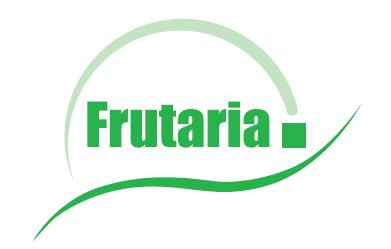
Indeed, at least for Spanish and Portuguese consumers (since this word in Portuguese means “fruit shop”, and for Spanish consumers, it will be directly associated with fruit products), the trademark in question, in its word element, will clearly be descriptive of the goods and services it was intended to cover, as it was applied for:
- Class 29: Dried fruits.
- Class 31: Fresh fruits.
- Class 35: Export of fresh fruits.
Nevertheless, this trademark was registered on 27 April 2010 and remained in force (and in use on the market) until 24 February 2022, when it was declared invalid. This was essentially based on the fact that the trademark was descriptive of the goods and services it covered, despite its graphic elements.
Dismissed in the first instance, it was the Board of Appeal that overturned the previous ruling and partially upheld the application for invalidity, on the understanding that the trademark in question was descriptive for goods in classes 29 and 31, but not for services in class 35. In view of this, the trademark owner appealed this decision before the General Court of the European Union, based on three arguments:
- That the trademark could not be considered descriptive because it had graphic elements.
- That the trademark had at least a minimum degree of distinctiveness, as it had been recognised as such in other opposition proceedings.
- That the trademark had acquired distinctiveness through use (also known as “Secondary Meaning”).
The General Court, having considered the appeal and the arguments of the parties, dismissed the appeal in its entirety, although it provided a series of useful concepts that we can extrapolate for future cases. Although it did not address the second ground of appeal, as it considered it unnecessary, it did address the first and third grounds, as detailed below, with the elements we consider most interesting:
On the possible descriptive or non-descriptive nature of a sign. In order to assess the descriptive nature of a sign, the relevant public for whom the goods and services are intended must be taken into consideration. Thus, it will not be the same if the public is the general public as if it is a specialised public, as the degree of attention will vary significantly. In this case, it was considered that the relevant public is the general public, as these are goods and services for everyday consumption.
As regards the symbol as such, in order to assess its possible descriptive nature, it is not only important whether said trademark consists of descriptive word elements, but also whether the accompanying graphic elements modify the meaning of the contested sign as a whole in relation to the designated goods. Thus, when the word element of a trademark is descriptive, the trademark as a whole is descriptive if the graphic elements of said trademark do not divert the attention of the relevant public from the descriptive message conveyed by the word element.
Given that the term “Frutaria” is directly descriptive for Portuguese consumers (it means “fruit shop”), and that the graphic elements accompanying the word element are a square, a semicircle and a curved line, which do not have any special or striking details, they are not sufficient to capture the consumer’s attention and thus divert their attention from the word element. In other words, the graphic elements, due to their simplicity and almost complete lack of stylisation, did not succeed in modifying the meaning of the sign, which is the essential requirement for a graphic element to compensate for the use of a descriptive term.. Therefore, here the General Court provided a very useful insight into being able to determine what is necessary for a graphic element to compensate for the descriptiveness of a word element.
Secondary Meaning and its evidentiary requirements. In order to analyse whether a trademark has acquired distinctiveness through use (i.e., a trademark that was registered with little distinctiveness or was quasi-descriptive), it is necessary to know that the public, through observation, is able to relate said sign to a specific business origin, thus fulfilling the main purpose of a trademark.
While there are many types of evidence that can be provided to achieve this, some have greater evidentiary value than others, such as, for example and particularly, surveys and/or market studies, as well as statements from professional bodies or relating to the specialised public.
In this case, the trademark owner provided, among other things, a statement from the head of his company’s administrative department, as well as sales invoices, brochures, etc. As recognised by the General Court and also by the EUIPO Board of Appeal, this was sufficient to prove that the trademark had indeed been used on the market, but it was not sufficient to prove that the target public associated said trademark with its business origin.
Thus, the General Court indicated that when the aim is to prove that a trademark has acquired a distinctive nature through use, the elements suitable for that purpose would be:
- Surveys
- Market studies
- Statements by trade and professional associations
- Statements by chambers of commerce and industry (in this case, those corresponding to the territory of Portugal).
That being the case, although it may seem like a well-worn topic, we find this ruling by the General Court interesting in determining two aspects that are often decisive for the viability (or survival) of a trademark on the market.
Thus, if we have a client who wants to register a highly descriptive term (if we cannot convince them to use a different term, which is often a difficult task), we must insist that a highly stylised graphic element be placed in a dominant position that is capable of attracting the consumer’s attention. On the other hand, in order to demonstrate Secondary Meaning, we will have to roll up our sleeves and do a lifetime’s worth of research to find out what consumers think and know.
Because whatever anyone says, fame is hard to earn and even harder to maintain.


